Automotive Online Reputation Management: A Complete Guide for Car Dealerships
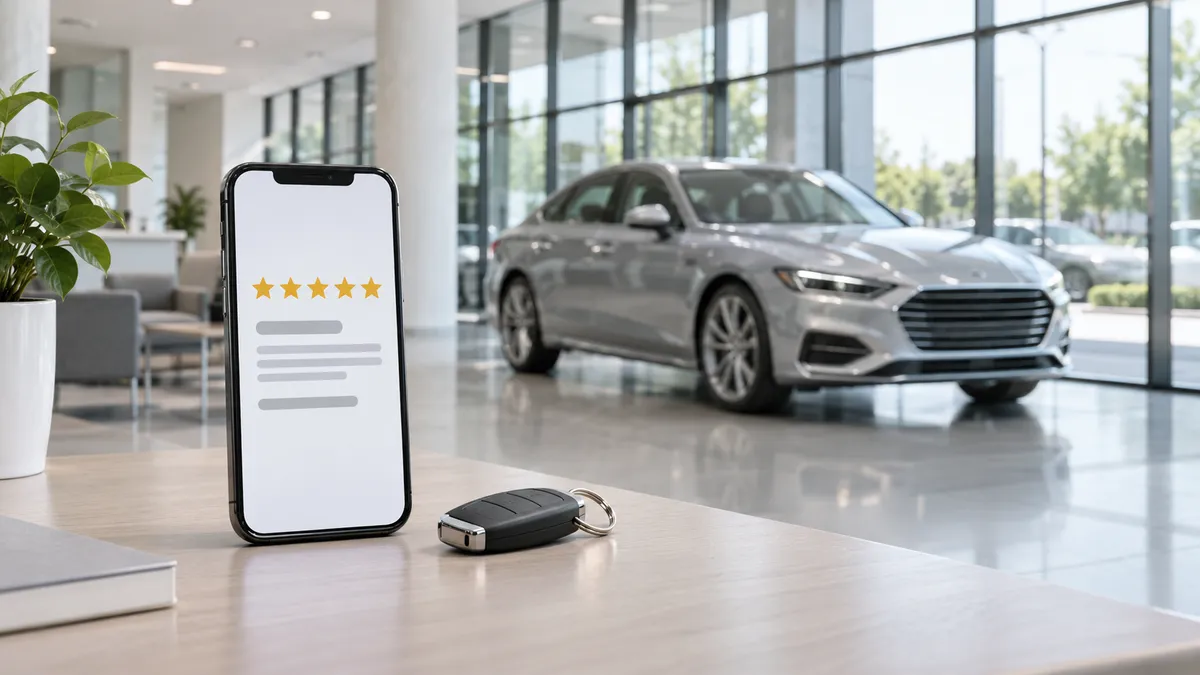
You can spend thousands on your showroom interiors, polish every car to perfection, and train your sales team on the perfect pitch. But if a customer Googles your dealership and sees a one-star review that says, ‘Nobody called me back’, that will seriously hurt your reputation.
‘Yup! That’s an expensive concern!
Welcome to automotive online reputation management, where your dealership’s reputation can travel faster than a sports car down an empty highway.
Today’s car buyers don’t just walk into the nearest showroom; they visit dealerships, check ratings, read customer reviews, and sometimes ask around in their WhatsApp groups before deciding. In other words, your online reputation may close the sale much before your salesperson says ‘Hello.
So how do dealerships stay ahead? Let’s have a look.
1. Why Online Reputation Matters More Than Ever
Buying a car is a turning point in the majority people’s lives. When customers buy four wheels and an engine, they are not just investing their money; they are putting their trust and expectations in you. The car is like another member of their household.
A dealership that communicates honestly, transparently, and professionally ingrains trust in customers. They will automatically attract good reviews, and their reputation can help dealerships:
Attract potential buyers and new customers from local searches.
Increase customer confidence before they visit the showroom.
Push your visibility on Google and marketplaces.
Motivate repeat purchases and referrals from customers.
Differentiate yourself in an increasingly competitive market.
Customers may forget your last festival offer, but they’ll remember how your team treated them when they raised a concern.
You can have competitive pricing, a great inventory, and attractive financing options. But when customers don’t trust your dealership, it’s a lot harder to get them through the door. Therefore, to build a positive reputation, what one needs is empathy, which means a good heart for listening, responding, improving, and delivering on your promises.
Because at the end of the day, the best advert for your dealership isn’t another promotional banner, but a happy customer recommending another customer: ‘you should buy your next car from them!’
2. Reviews: Your Digital Word-of-Mouth Marketing
Online reviews are your dealership’s unofficial sales force. Only this team works 24/7, never takes a lunch break, and never complains publicly!
Platforms that shape the perceptions of your business mainly include Google, Facebook, Instagram, Twitter, and other automotive marketplaces. So, no harm in asking customers to provide honest feedback on test drives, vehicle purchases, & service resolutions.
A few review-attracting tips:
Send personalised review requests by SMS or email.
Send QR links or other review links so that customers can easily leave their feedback.
Ask customers for feedback regularly.
Don't buy reviews or pressurise your customers to give you five stars.
After all, it’s your authenticity that wins over artificial perfection every time.
3. Respond to Reviews Like a Human, Not a Robot
Here’s a thought for the day. What explains a potential customer more about your authentic dealership: 200 five-star reviews or an intelligent response to a genuinely unhappy customer? Both matter, but the latter reveals your character. A good response to an automotive review should acknowledge the customer’s experience, show empathy, and provide a practical solution.
If you get a positive review, thank the customer sincerely. For negative ones, acknowledge the concern and invite the customer to move the conversation offline. Never argue, because you may win the argument with a defensive response, but you will never win their hearts that way. Remember, responses are exclusively for the reviewer; hundreds of potential buyers are silently judging your handling process.
4. Keep Your Digital Showroom Presentable
When you are in front of a customer, trying to convert your sale, the customer’s first glance falls on your showroom ambience, and then your presentability, body language, and finally the product. As much as you maintain yourself and your physical showroom, your digital platform too needs consistent care and maintenance for visibility. See to it that your automotive directory listings, such as Google Business Profile and social media pages, show only organic content, not phoney elements. Post original business details and address, with updated working days, opening and closing hours, showroom photos, and service information.
5. Use Technology to Manage Your Reputation at Scale
Monitoring hundreds of reviews, responding to customers, tracking sentiment, and managing multiple dealership locations manually is no one’s dream job. That’s where automotive reputation management software comes into play.
The right platform helps you check reviews on different social media, automate the collection of review requests, respond to customers from a single dashboard, take note of repeated complaints and feelings, and compare location reputation performance.
Another way is the technology-driven approach to client feedback and online reputation management automotive using solutions like ReviuAI. Whatever it may be, automation should not replace empathy. Where technology is required, let it take care of the situation, so your customer care team can focus on solving the real customer issues.
6. Turn Negative Feedback Into Business Improvements
A bad review isn’t always a reputation disaster. Sometimes it’s free business consulting provided without an appointment! Repeated complaints about late vehicle deliveries are part and parcel of the automotive industry, and you can see this while examining your delivery register.
Customers dissatisfied with your delayed service? Just have a look at your scheduling app; make the item description and rates explicit; make sales conversations more direct with no hidden charges.
Good automotive strategies work beyond good ratings; they introspect their operational drawbacks and try to improve the purchase experience of every customer. For dealerships with multiple locations, analysing feedback collectively can show up trends that individual branches may not see.
7. Measure What Actually Matters
It’s nice to see your stars growing, but reputation management shouldn’t stop there.
Measure the metrics that matter:
Number of reviews and average rating.
Look at the automotive review response rate and the response times.
Sentimental trends in customer reviews.
Google Business Profile interaction.
Enquiries generated online.
Repeated customer concerns.
The aim of automotive online reputation management is not to chase five stars forever; it's about building a dealership that customers actually recommend.
Frequently Asked Questions
1. What is automotive online reputation management?
The process of building and maintaining a positive image of a car dealership or automotive business online is called automotive online reputation management. It requires gathering customer reviews, monitoring them, responding to them, and managing them diligently. Over time, this process helps boost customer confidence, attract new customers, retain existing ones, and generate referrals, thus improving your digital visibility across social media platforms like Facebook, Twitter, Google, Instagram, and other automotive platforms like CarDekho.
2. How can automotive reputation management software help dealerships?
Softwares like ReviuAI, collects reviews from different locations, centralises monitoring, automates feedback requests, detects sentimental reviews, and respond to them carefully making the process smart and thus saving time and allowing dealer teams to stay on top of customer communication.
3. How should dealerships handle negative online reviews?
First and foremost, address the customer's concern; do not argue; respond to the issue carefully, professionally, and on time. If the customer becomes aggressive, offer a solution offline, close the concern, and use the feedback as a marketing strategy to improve internal processes.