
How Hotels Can Automate Review Management and Strengthen Their Online Reputation
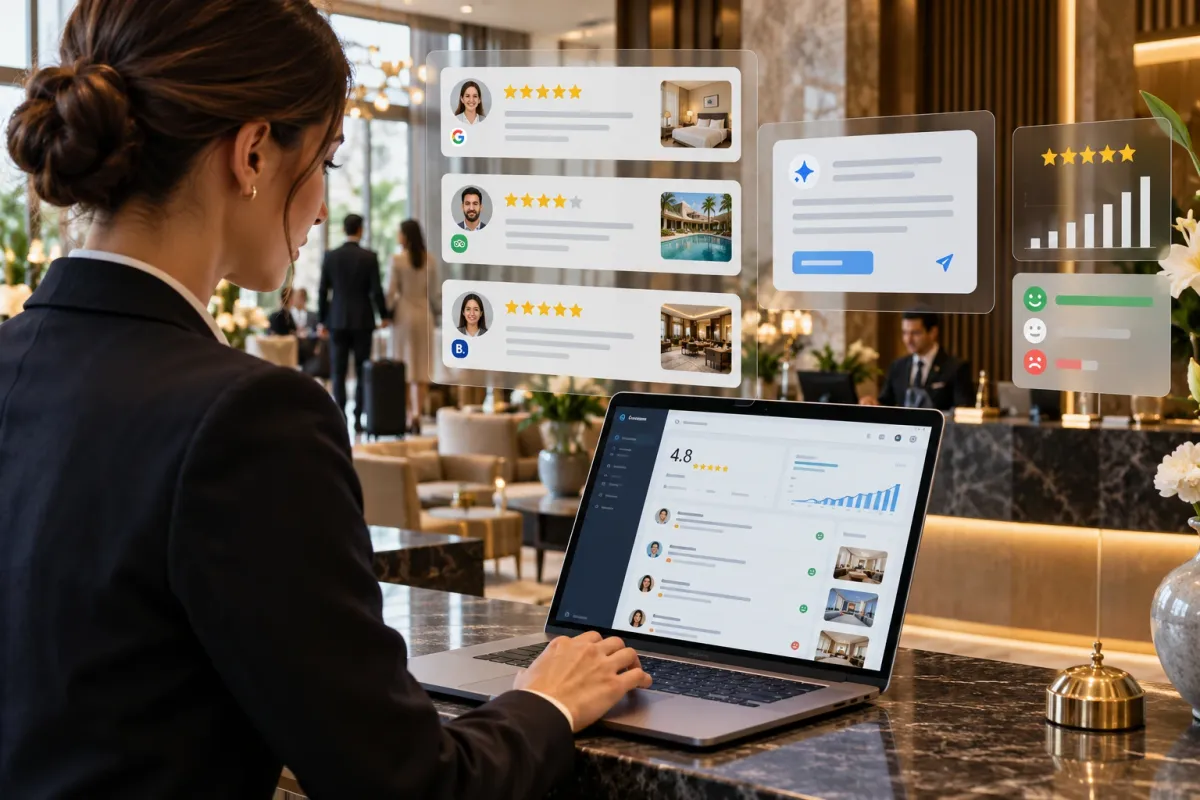
Managing a hotel is a juggling act of a thousand responsibilities.
Guests keep coming and leaving; rooms need to be made ready after housekeeping. Again, the restaurant is somehow short on jugs and glasses. Somebody forgot his wallet there; then there’s the four-star Google review that the shower nozzle could be improved. Customer care sees the review and thinks, I’ll respond later on.’ And this ‘later on’ suddenly turns into a month.
Hearty welcome to this wonderfully messy world of hotel review management! The news! Now hotels can manage their online reputation without using spreadsheets, scrolling alerts, or someone’s mercy. Automation transforms review management from a tedious chore to a structured part of the guest-experience approach.
Your Online Reputation Is Your Digital Lobby
Reviews can determine the client’s perception of a property; therefore, Online Reputation Management for Hotels is an ongoing responsibility, not a one-time marketing activity.
Normally, customers visit your website much before they visit the physical lobby of your hotel. They view your location, photos, facilities, star ratings, and most importantly, comments from past guests. They talk about your amenities, food, and service. But the question is, are you listening?
Why Manual Review Management Gets Messy
Restaurants are manageable. But at 5-star hotels, they are always busy. It’s like: one customer enjoys breakfast, another complains about the washroom; some praise the spa; and a few write an essay about the air-cooler at midnight.
So, manual tracking may result in:
Delayed replies
Ignored reviews
Repeat responses
Unnoticed, recurring complaints
Waste of valuable staff hours
Hospitality can never be replaced with automation; however, it can make your administrative processes much more efficient.
What Can Hotel Review Automation Do?
1. Monitor Reviews Across Multiple Channels
Monitoring reviews across multiple locations means you have reached the end of your energy reserves. This exhausting process calls for manual labour, time, and zeal. Here is where review automation becomes a blessing in disguise; it brings multiple feedback sources into a unified workflow and streamlines this tiring task, helping you spot sensitive patterns and respond to them effectively and promptly. It’s easy to send a quick thank-you message to a five-star review, but a serious concern needs escalation as a priority.
2. Make Responses Faster and More Human
AI-based tools can help write responses based on the review content and sentiment. This is handy when your team has already used the phrase ‘Thank you for your valuable feedback’ a hundred times before checkout. Nevertheless, automated responses shouldn't sound robotic; the ideal approach is often AI-assisted, not completely hands-off. It should be like when AI drafts a response, the team member personalises the content, especially when it comes to sensitive concerns like stale food, unhygienic ambience, etc.
3. Turn Reviews Into Guest-Experience Insights
Stars are fine, but feedback is more revealing. Visualize dozens of guests talking about timely check-in, average breakfast, noisy rooms next to the generator, and poor housekeeping. Never misunderstand them as mere review data; they are business intelligence. Your customer-experience team is well equipped to identify patterns of concerns that need immediate attention. Simply put, your guests are forming a consultation group for you, and that too, free of cost.
4. Automate Review Requests
Happy customers generally wish to post their review. Sadly, when they get home, they get busy, forget, and by the time they remember their experience, it’s almost 3 months. Automated review requests simplify this process by inviting guests to provide feedback at the right time, soon after they leave the hotel premises.
Platforms such as ReviuAI offer automated review-collection workflows through channels including WhatsApp, SMS, email, QR codes, and NFC, which is more convenient for hotel guests.
Choosing the Right Hotel Reputation Management Software
As resources grow, the right Hotel Reputation Management Software can centralise review tracking, response workflows, sentiment analysis, reporting patterns, and feedback collection.
Consider the following when assessing a platform:
Check the monitoring channels for reviews.
Does it provide sentiment analysis?
Are response options customisable?
How about reporting and analytics?
What’s the mode of review-asking, and what are its escalation workflows?
How does it integrate with existing systems?
Is it user-friendly?
Ultimately, if your team needs 5-day training simply to track the reviews, even the latest technology doesn’t make sense.
Don't Ignore Google Reviews
Hotels should be extra mindful of Google Reviews as potential guests may encounter them while searching for a place to stay, comparing properties, or researching destinations. More than just a digital business card, Google Reviews for Hotels are part of the booking journey.
Read the customer comments and respond to every piece of feedback carefully. It shows that your hotel is listening. More importantly, repeated comments can reveal where the guest experience is winning, and where it is falling short. The point is not to earn a perfect five-star score, but to build an image that naturally earns positive feedback.
Automation Shouldn't Mean Copy-and-Paste Hospitality
Here's the negative side of automating everything.
Imagine a customer comments:
‘The receptionist was too helpful; she arranged a cab to the airport’.
To this, the hotel staff responds:
Thank you for your valuable feedback’. Technically, it's acceptable. But emotionally? Sounds like a ready-made template.
A well-designed automation gives you speed and consistency, allowing room for human judgment where you can reframe critical responses, use the employee names, and escalate serious concerns. However, posting the same one-liner to every guest is not recommended. Let the technology do the repetitive stuff so your people can focus on the moments that really need human intervention.
From Reviews to Revenue Protection
Hotel reputation lies not in marketing, but in the guest experience and how the hotel responds to feedback.
The loop should look like:
Guest experience -> Review -> Response -> Insight -> Improvement -> Business growth -> Revenue protection.
That means fewer missed reviews and a clearer view of recurring issues for boutique hotels. For resorts and hotel chains, it gives a more uniform reputation-management process across properties. And for a busy general manager, it means dealing with fewer concerns.
For potential clients, reviews can completely change the perception of your hotel. Automation turns feedback into real improvements, helping hotels stay on top of that conversation, respond promptly, spot recurring concerns, and address the problems on time. It’s not about having a perfect-looking review profile. It’s something people really want to talk about as guests. And if technology helps your team spend less time managing reviews and more time improving the standard, that’s a five-star concept.
FAQs
1. What is automated hotel review management?
It’s a technology that brings reviews together and helps hotels spend less time manually managing them while ensuring that guest feedback is monitored, responded to, and acted upon promptly and consistently.
2. Can AI completely replace a hotel's review management team?
The manual effort in the administrative section can be reduced to an extent but AI cannot completely replace the team. While addressing critical comments, resolving complex concerns, and maintaining an authentic brand voice, human intervention continues to be indispensable.
3. How should hotels choose Hotel Reputation Management Software?
For Hotel Reputation Management Software, hotels should consider key factors such as channel coverage, automation capabilities, reporting, customisation, escalation options, integrations, scalability, and ease of use. The right platform slides right into the team’s existing workflow.